


Pseudouridine, mRNA Vaccines & Spike Protein Persistence
The spike protein mRNA found in the Pfizer & Moderna vaccines differs in subtle but important ways from the mRNA found in the SARS-CoV-2 virus itself.

In M&M #58 I spoke to genomics expert Kevin McKernan, asking him a simple but important question: is the mRNA found in the Pfizer/BioNTech and Moderna COVID vaccines identical to the equivalent mRNA found in the SARS-CoV-2 virus?
The answer is, “No.”
The mRNA in these vaccines was engineered to be different from the natural viral mRNA in subtle but consequential ways. Let’s briefly review the basic molecular biology required to understand mRNA vaccines and SARS-CoV-2, examine how the vaccine mRNA differs from viral mRNA, and consider how this difference may relate to recent observations in the literature.
If you prefer to listen to Kevin’s explanation of this stuff, check out this clip:
Molecular biology 101 (skip this section as needed)
Our cells contain DNA, an elegant form of molecular information storage. The genes contained within our DNA encode the primary structure of proteins, the molecular machines which conduct the physiological business of life.
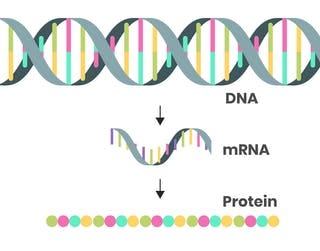
To go from DNA to protein, our cells use RNA as an intermediate. DNA gets turned into messenger RNA (mRNA), named for the fact that this mRNA relays the genetic the information contained within our genes (“the message”) to the molecular machines that manufacture proteins. The process of turning mRNA into protein is translation. For our purposes here, we will be focusing on how the properties of mRNA influence the process of protein synthesis (translation).
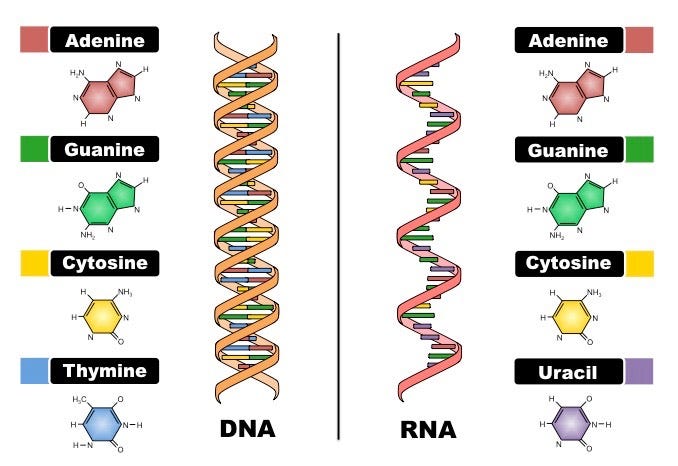
There are four molecular building blocks used to encode information in DNA, abbreviated as A, T, G, and C. Each letter stands for the name of a small molecule used a basic unit of our genome.
RNA is also composed of four building blocks, which are the same as those used in DNA with one difference: instead of “T,” there is a “U,” a molecule called uracil. Remember this bit about the letter “U”—it will be important as we go on.
Basic biology of SARS-CoV-2 infection (skip this section as needed)
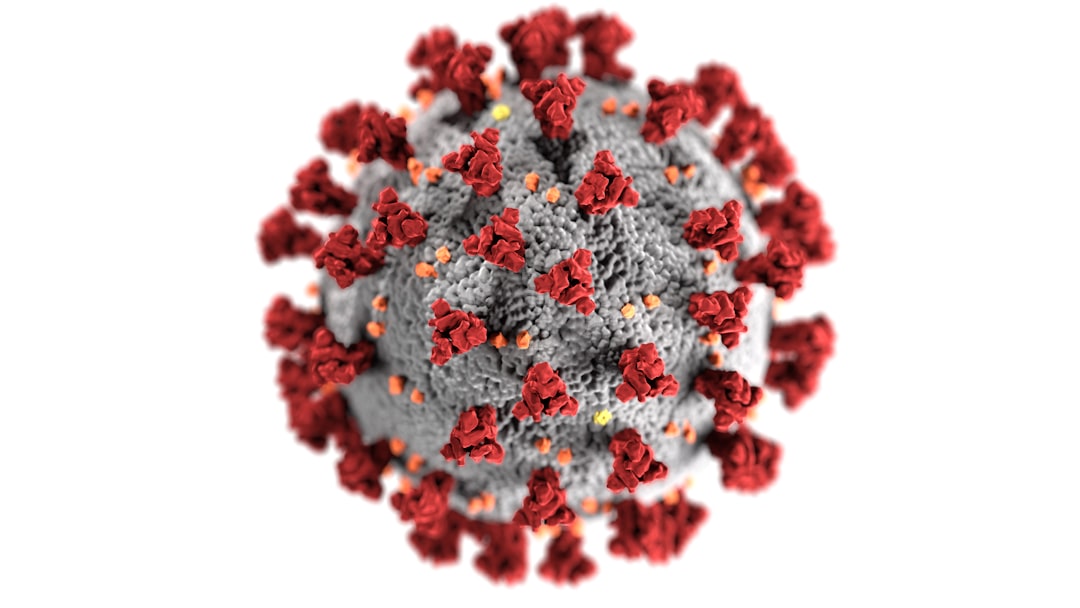
SARS-CoV-2, the virus responsible for COVID-19, is a type of RNA virus. This means that each viral particle contains an RNA genome, not DNA. The outside of the virus is studded with spike proteins, which allow it to get inside of our cells. From there, it tricks our cellular machinery into using its viral RNA to make virus proteins, which are then assembled into new viral particles.

mRNA vaccines & mRNA metabolism (skip this section as needed)
Unlike traditional vaccines, which contain weakened versions of an entire virus, the Moderna and Pfizer/BioNTech (henceforth just “Pfizer”) vaccines contain only mRNA. More specifically, they contain the mRNA sequence encoding the SARS-CoV-2 spike protein.
Here’s the idea: by giving this mRNA molecule to our own cells, viral spike protein will be produced, but not a complete virus. This stimulates an immune response despite the fact that we are only exposed to a single SARS-CoV-2 protein.
Animal cells are really good at chopping up mRNA molecules with enzymes. In fact, the longevity of mRNA molecules is an important aspect of how our cells regulate gene expression. The more stable an mRNA molecule is, the longer it hangs around and the more protein that gets made from it.
Molecular biologists can use laboratory tricks to alter mRNA stability. Because mRNA is generally unstable, getting mRNA vaccine technology to work was challenging. It’s very easy to package mRNA into a vaccine and inject it into an animal, but the mRNA simply gets degraded by enzymes before any protein production takes place.
To get mRNA vaccines to work, scientists had to come up with a way to stabilize mRNA, allowing it to get into our cells and stick around long enough for protein synthesis to happen.
How is mRNA stability enhanced in mRNA vaccines?
Pfizer and Moderna solved this mRNA stability problem, in part, by making a subtle tweak to the mRNA encoding the SARS-CoV-2 spike protein. They swapped one of the standard letters in the RNA code, the “U” (uridine), a for slightly different molecule called N1-Methylpseudouridine.
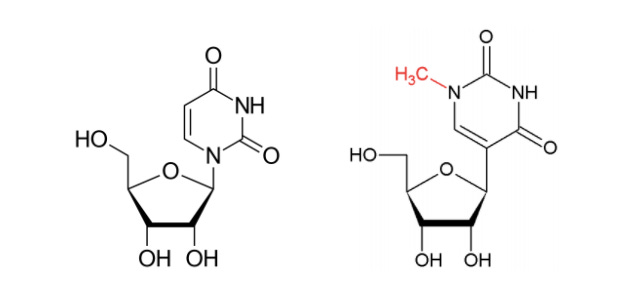
Pseudouridine and uridine are very similar, differing by just a few atoms. Even though the vaccine mRNA is not identical to the native mRNA of the virus, it still encodes the SARS-CoV-2 spike protein. But even this slight difference makes a difference, which is why the engineering choice was made. Using pseudouridine has the effect of stabilizing the mRNA so that it is not immediately degraded when injected into an animal.
During an earlier R&D phase, scientists at Pfizer and Moderna presumably tried injecting regular mRNA into animals, which failed to stimulate an immune response. The stabilizing effect of pseudouridine allowed for robust spike protein production, thereby stimulating a potent immune response. (The spike protein mRNA in vaccines is also protected by lipid nanoparticles—small bubbles of fat.)

All of this makes perfect sense and seems to be a rational design decision. Two important questions spring to mind:
Can mRNA molecules be too stable and cause too much protein synthesis?
Beyond mRNA stability, are there any cellular consequences to swapping in pseudouridine for uridine?
The answer to both questions is, “Yes.”
Let’s investigate each in more detail, in light of some recent findings from the scientific literature and outstanding questions regarding mRNA vaccines.
mRNA stability & spike protein persistence
How long after vaccination do these pseudouridine-containing mRNA molecules stick around? This was something measured in a recent study comparing the immune responses to vaccination vs. SARS-CoV-2 infection.
To measure this, researchers biopsied the lymph nodes of people who had received two doses of the Pfizer vaccine. They measured the presence of vaccine mRNA in the lymph nodes as early as 7 days and as late as 60 days after the second vaccine dose.
Intriguingly, they were able to detect vaccine mRNA 60 days out. Vaccine mRNA seems to ramp up for a couple weeks, being detectable in most samples 16 days after the second shot. A similar pattern was seen for spike protein in vaccinated individuals. This suggests that a getting two shots will lead to spike protein expression for at least a couple of weeks in most individuals.

They also measured spike protein levels in samples taken from people who died from COVID, finding that spike antigen was present at lower levels in these samples compared to those taken from vaccinated individuals. This is quite remarkable, as it suggests that spike protein levels get to higher levels after two jabs of the Pfizer vaccine compared to people with severe COVID.
But most people who receive two shots of that vaccine (such as myself) are symptomatic for about a day and don’t experience any obvious side effects beyond that. So does it really matter that spike protein levels can persist for weeks following vaccination?
The answer is: we don’t know.
Let’s consider this issue of mRNA and spike protein persistence in the context of how long these things normally persist.
It would be very unusual for mRNA to persist for weeks under natural conditions. Most mRNAs have a half-life of a few hours and most proteins of a couple days. Gene expression and protein levels are tightly regulated in space and time. If there’s a breakdown in regulatory control, resulting in too much or too little of something, there can certainly be negative consequences. And that’s for native proteins. Our cells generally try to prevent expression of foreign proteins, such as those belonging to viral intruders.
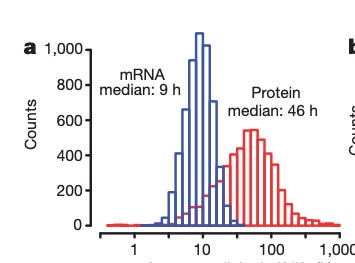
Whether or not weeks of SARS-CoV-2 spike protein expression is a cause for concern depends on the physiological effects of the spike protein itself. A natural question arises: is the spike protein innocuous or does it have any toxic effects?
Is the spike protein toxic?
I’m not going to jump all the way down this rabbit hole, but there is certainly some evidence to suggest that the SARS-CoV-2 spike protein is not innocuous. It likely has some toxic effects. Whenever anything is toxic, there are usually dose-dependent effects, i.e. with a higher concentration of the toxic agent, more or different damage occurs.
Here are a couple studies looking at spike protein toxicity (as always, use this content if you have trouble accessing papers).
“SARS-CoV-2 Spike Protein Impairs Endothelial Function via Downregulation of ACE 2” (2021) [link]
“Superantigenic character of an insert unique to SARS-CoV-2 spike supported by skewed TCR repertoire in patients with hyperinflammation” (2020) [link]
It would actually be surprising if the SARS-CoV-2 spike protein didn’t cause any problems for our cells. After all, it is a foreign protein sufficient on its own to stimulate a symptomatic immune response. Our body doesn’t want to around at all, let alone persisting for weeks.
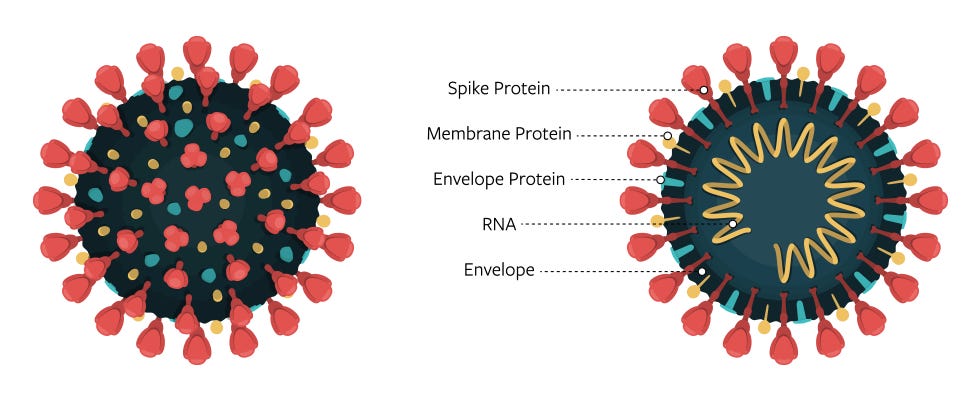
Total spike protein levels reached after vaccination will inevitably vary from person to person depending on various factors. For example, the Moderna vaccine contains more mRNA than the Pfizer vaccine, likely yielding higher levels of spike protein. If you get multiple shots, the total length of time separating them should affect expression levels. Lastly, people are different: some of us have more aggressive protein synthesis machinery than others.
Does pseudouridine have consequences beyond mRNA stability?
In addition to the stabilizing effect that the use of pseudouridine had for the mRNA vaccines, there are other consequences. The biology gets complicated, so I’ll simply say that it can cause issues for the molecular machines that scan mRNA molecules and translate this genetic information into a protein. These are called ribosomes. If you want to get a sense for how these things work, watch this.
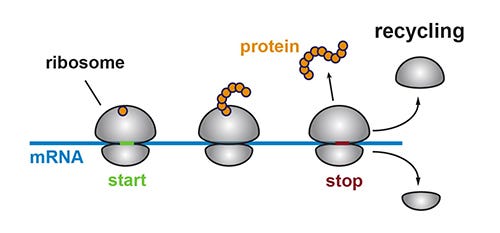
When ribosomes makes errors in translation it can result in the wrong amino acid being inserted into the protein, or one that is a bit longer or shorter than it should be.
In addition to swapping in pseudouridine as one of the “letters” in the spike protein mRNA, vaccine designers also did something called codon optimization. This has to do with the fact that different organisms, such as humans vs. SARS-CoV-2 viruses, use different “dialects” of the universal genetic code.
For example, humans tend to use the genetic sequence “CGG” to code for the amino acid arginine. But there are other three-letter sequences that also code for that amino acid. Our cells “like” to use CGG to code for arginine, but other organisms often use other three-letter sequences to encode the same thing.
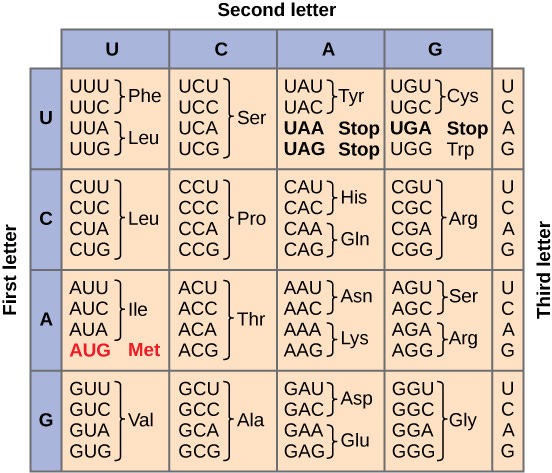
Because the mRNA vaccines involve getting a viral protein expressed inside of human cells, they codon optimized the mRNA sequence to use the three-letter sequences optimal for human cell protein production. Even though the spike protein mRNA in the vaccine ends up encoding the exact same sequence of amino acids that go into the spike protein from the virus, the actual sequence of letters in the mRNA were not the same as in the virus.
But there’s a potential problem.
It turns out that doing this kind of thing can affect how quickly the ribosome reads the mRNA. If you’re an American English speaker, imagine reading an article written in British English (or vice versa). It’s the same alphabet, but some words are spelled differently. When you scan over the words with British English spellings you will likely pause for a split second. You can read and undertand the word centre, but you’re used to seeing center, so your brain skips a beat.
This is what can happen when ribosomes encounter mRNA in which the three-letter codes have been tweaked in the way we’ve described. Ribosomal pausing can cause the protein to fold in ways it wouldn’t otherwise. The 3-D shape that a linear sequence of amino acids is folded into is a critical determinant of protein function. If the same amino acid sequence gets folded in two different ways, the resulting proteins will not behave the same way.
All of this stuff can and does happen in other contexts. Is it actually happening with the mRNA in the Pfizer and Moderna vaccines? Is the mRNA they contain producing not only bona fide SARS-CoV-2 spike protein, but also protein variants created as a consequence of these sequence changes engineered into the vaccine mRNA?
The answer is: we don’t know. But Pfizer and Moderna probably do.
Does the mRNA from the Pfizer & Moderna vaccines only make native SARS-CoV-2 spike protein?
As far as I know, there’s no clear evidence about whether the mRNA found in the Pfizer or Moderna vaccines produces only the spike protein associated with SARS-CoV-2, or, in addition, one or more variants of this protein. If that data is out there, please post a link in the comments.
What’s interesting is that this is a very easy question to answer. Using standard laboratory techniques, it’s straightforward to determine and measure whether these mRNAs exclusively produce the SARS-CoV-2 spike protein in it’s natural configuration. In fact, Moderna and Pfizer scientists have presumably done such experiments.
In my conversation with Kevin McKernan, he pointed me to some intriguing content found within a February 2021 report by the European Medicines Agency (EMA). This is an agency that issued an assessment of data submitted by Pfizer/BioNTech as requirement for the marketing authorization of the vaccine. It’s a long, dry document, but refers to some interesting observations hinting that perhaps there is not one single version of the spike protein produced from this mRNA.
Here’s an example from the EMA document:
Additional data for the active substance are to be provided to confirm the identities of the observed Western Blot (WB) bands obtained by the in vitro expression assay. Protein heterogeneity, resulting in broad bands on the WB and uncertainties in the theoretical intact molecular weight of the spike protein, is assumed to be due to glycosylation.
Kevin McKernan explained it here (just watch until ~7:50):
What are these “bands” and “smears” Kevin refers to? These are terms associated with a biochemistry technique called Western blotting, which allows one to detect which proteins are present in a mixture.
For example, one could take the mRNA from the Pfizer vaccine, do an “in vitro translation assay” to get ribosomes to make protein from the mRNA, and then perform a Western blot with the resulting solution.
If one and only one protein was produced—in this case, the native SARS-CoV-2 spike protein—then you would see one distinct band in this kind of assay. However, if other variations of this protein were also produced, such as slightly larger or smaller versions, then you would see multiple bands, or a smeary-looking band. Apparently the EMA observed something like this in the Pfizer data.
Here’s some example data, entirely unrelated to the mRNA vaccines, to give you a sense of what this kind of thing actually looks like:
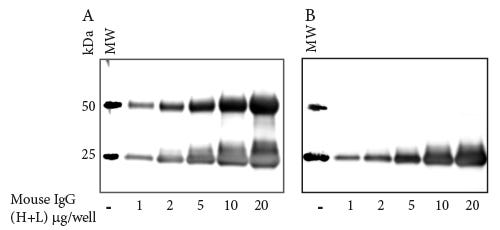
If you’ve never seen this kind of data before, simply notice that you sometimes see a clear, crisp band, and other times you see bands that are thicker, clustered together, or smeared out. This is the type of thing referenced in the EMA document.
Ignorance is bliss
At the end of the day, this means that a complete characterization of the protein(s) produced by translation of these vaccine mRNAs has yet to be done, or at least released by Moderna and Pfizer/BioNTech.
Are these mRNAs being translated into multiple, slightly different versions of the SARS-CoV-2 spike protein? If so, do these protein variants have properties distinct from the native SARS-CoV-2 spike protein? Are they innocuous? Do they also stimulate an immune response? Are they cytotoxic?
We don’t know. As someone who received two doses of the Pfizer vaccine, I would love to see the data.
These questions are not difficult to answer. In fact, the vaccine manufactures presumably know the answer to at least some of them. Moderna and Pfizer scientists would have inevitably done the kind of protein characterization work described above and determined what, if any, proteins are translated from their mRNA beyond the native SARS-CoV-2 spike protein.
But then again, what you don’t know can’t hurt you, right?
If you enjoyed this article, you may be interested in these episodes of the M&M podcast:
Kevin McKernan: Genomics, PCR, COVID Testing, mRNA Vaccines, Blockchain Technology, Cannabis & Psilocybin Mushroom Genomes | #58
Martin Kulldorff: Public Health, Pandemics, Epidemiology, SARS-CoV-2 & COVID Public Policy | #61
Alina Chan: The Mystery of COVID-19 & the Origins of SARS-CoV-2 | #45
Many don't realize that there are so many special cases even for translation of natural RNA bases, so much that special software is needed to determine the resulting protein.
All those rules are not known for N-1-methylpseudouridine, so some aminoacids can vary in the resulting protein, with unknown possibly harmful long term effects.
I find this to be pretty g-d disturbing: ". . . spike protein levels get to higher levels after two jabs of the Pfizer vaccine compared to people with severe COVID". I really did not sign up for that when I agreed to get vaccinated.