


How To Read Any Scientific Paper For Free
"You should never have to pay for taxpayer-funded knowledge."

Note: the information in this article does not constitute advice. It is merely a description of common strategies people report for accessing the scientific literature.
If you have ever tried to read a scientific paper online, you have probably run into a paywall. Most scholarly papers are behind paywalls, as opposed to being open access. This can be especially frustrating knowing that a lot of research is funded with taxpayer dollars.
The first thing to try is simply to do an internet search of the paper title, perhaps adding “PDF” to your search. If that doesn’t work, there are are two other simple ways anyone can read a scientific paper for free:
Search for free versions, which are sometimes available;
Use Sci-Hub and download a copy;
E-mail the senior author, politely requesting a copy.
Below is a simple example, illustrating how you can access a paper using both methods above. Method #1, emailing the senior author, almost always works within a few days. Method #2 using Sci-Hub will work instantly, as long as you have internet access.
Example: accessing a paper in Nature Reviews Neuroscience
Let’s say you discover this review paper about psychedelics. It looks interesting and it’s published in the prestigious journal, Nature Reviews Neuroscience:
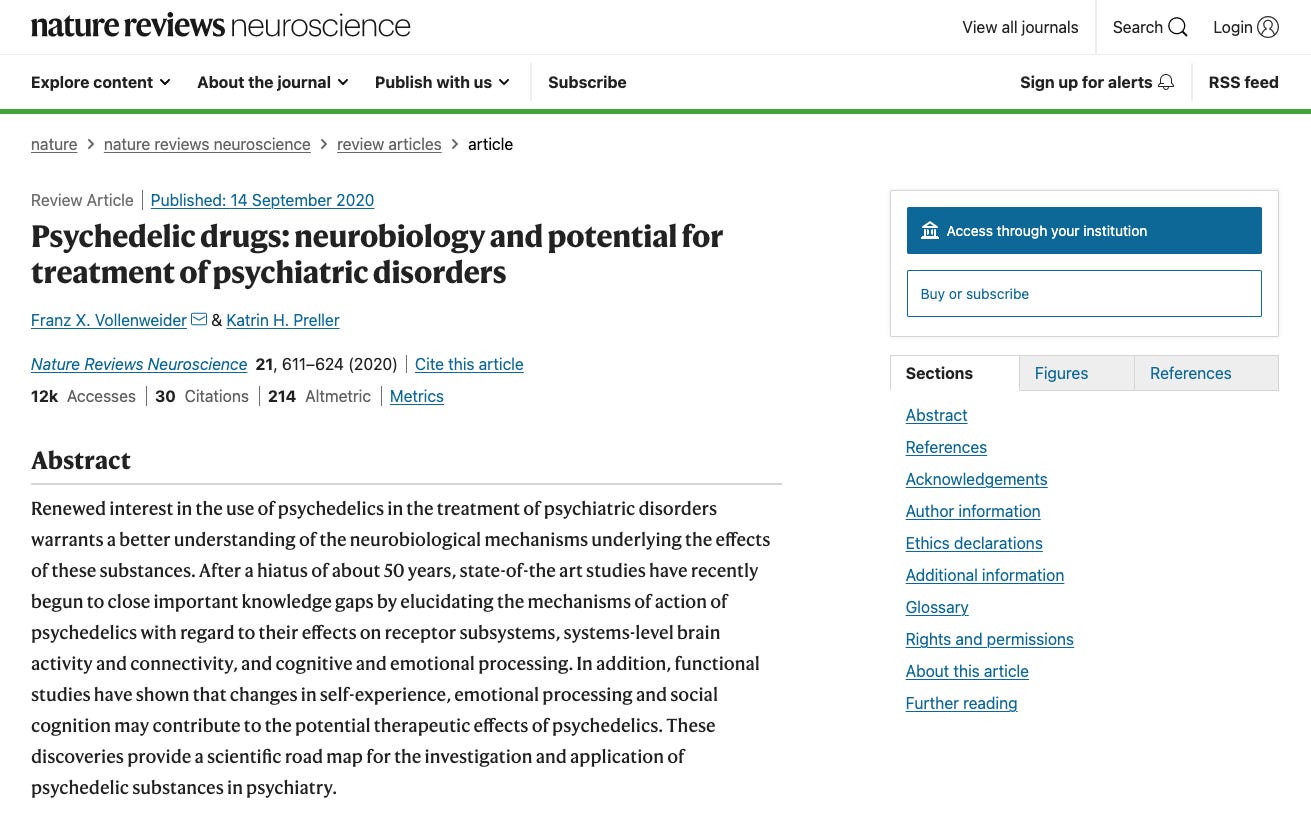
You will always be able to see the title and abstract—the short summary of what the paper is about and its main conclusion. If it’s not an open access journal, you will not be able to access the rest of the paper (in most cases). Instead, you will be asked to rent or buy this article, or subscribe to the journal:

If the prices for individual papers or journal subscriptions seem intuitively high to you, trust your instincts. The largest academic publishers generate enormous profits, with margins that are often higher than mega corporations like Starbucks, Disney, and Big Tech.

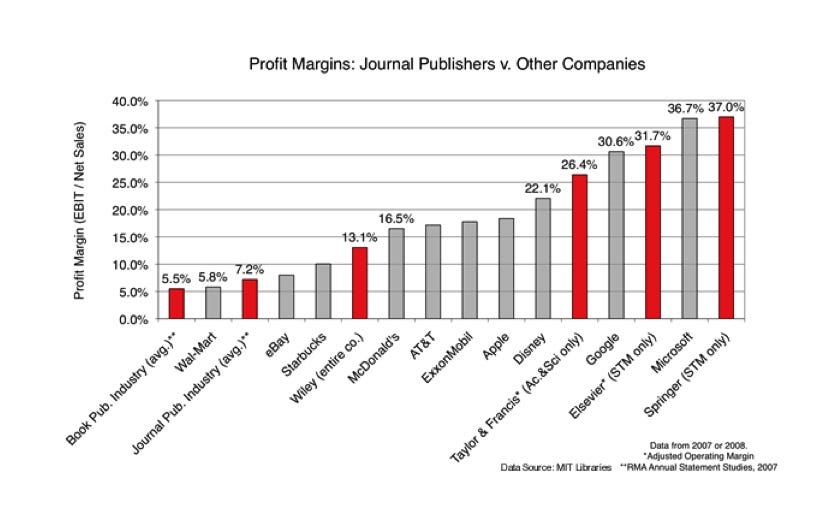
In my view, you should never have to pay for taxpayer-funded knowledge. Luckily, anyone can access papers using the two methods I listed at the beginning. Here’s how they work using an example paper…
Method #1: Use these tools to check for free versions online
There are often free versions of papers available online. The following tools can be used:
Google Scholar or the Google Scholar Chrome extension
You will often be able to find free versions using any one of these tools.
Method #2: Use Sci-Hub to gain instant access.
Sci-Hub is a website that provides free access to research papers and books. It gets around publishers’ paywalls in different ways, providing access to literature in defiance of copyrights. The URL for Sci-Hub can change (Sci-Hub has been sued previously for copyright infringements) but it is easily findable.
The Sci-hub main page looks like this:

Now, simply paste in the URL or DOI code associated with your paper of interest and click “Open”:

You can now download a copy of the paper. That’s it. One drawback of Sci-hub is that it often will not have new papers which have recently been published.
Method #3: email the senior author and ask for a copy
Every paper will have a corresponding author. This is often the last name listed. There will be an email listed somewhere or an email icon next to one of the author names:

Once you have their email, you can send them a message, like this:
Dr. [Last Name], I am interested in your recent paper, [Title of Paper]. Would you be willing to send me a PDF? Thank you!
That’s it. If they read your email you will almost always get a short response including the full paper. However, scientists are busy people and often have full inboxes. It could take a few days (or longer) to hear back. The second method typically gets you access without delay.
Scientists are usually more than happy to share PDFs with anyone interested in their research. They also don’t see a single penny of any revenue generated by the sale of their published work by publishers.
If you're interested in learning more about the business of scientific publishing, open access science, and new innovations like Sci-Hub, check out these M&M podcast episodes:
Thank you so much for this. Knowledge should be free.
Hello,
Im new here and i look forward to reading and listening to all your info.
Thank you.